

Four Is Allowed. Is It Better?
EHON lets most Toronto lots carry four units. That makes it tempting to assume four is always the right answer. On many lots it is. On others, a triplex delivers a better result for less money and less risk. Deciding on a triplex or fourplex comes down to how the fourth unit affects size, time, cost and approvals on your specific lot.
This guide covers the cases where three wins. For the build process, see our triplex construction service.
The test we run
Model three units with no variance against four units with whatever it takes. Compare total cost, start date, unit sizes and realistic rent. The better project is the one with the better return for your risk, not the one with more doors.
Case 1: Narrow Lots
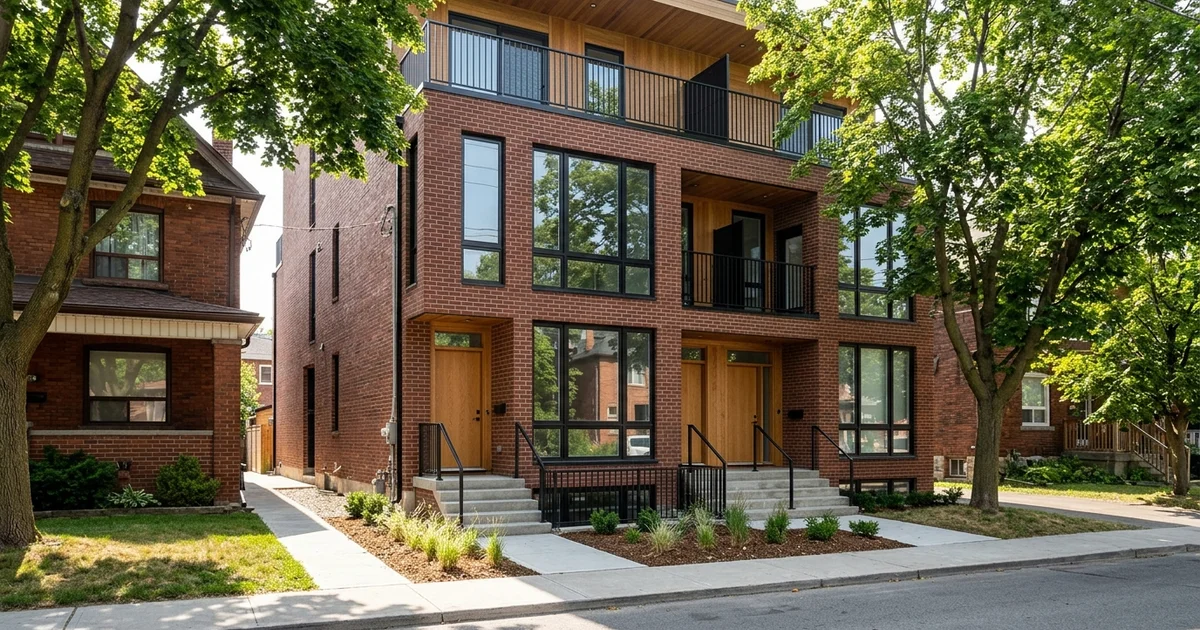
On 25-foot lots, side-yard setbacks leave a narrow building. Three units, one per floor, usually fit well. A fourth unit often needs a side-yard variance or produces units too small to rent well. Our guide on triplex unit layouts shows how three units stack comfortably in a narrow house form.
Case 2: Avoiding Variances
Every Committee of Adjustment variance adds 4-6 months, neighbour notice and the risk of refusal or appeal. If the fourth unit needs one or two variances while three units need none, the triplex can start construction months sooner. That time is money: loan interest, property tax and lost rent all keep running.
Case 3: Lower Carrying Cost
A triplex usually costs less to build than a fourplex on the same lot, in a band of about $400K-$1.1M versus $500K-$1.4M for a fourplex. Fewer kitchens, bathrooms and meters mean lower hard costs. Combined with a faster start, the lower budget can mean less equity tied up and a smaller construction loan.
Case 4: Family-Size Units
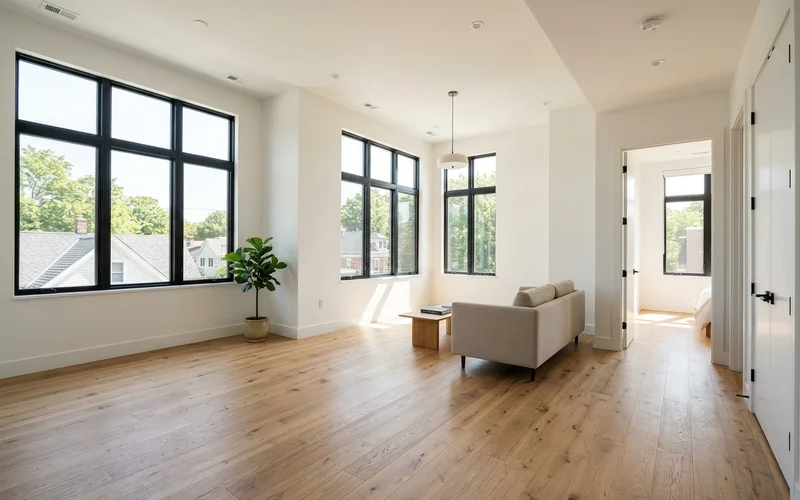
Three units on a typical lot can each be two or three bedrooms. Four units on the same lot often drop to one or two bedrooms. Family-size units attract longer-term tenants, which means less turnover, fewer vacancy weeks and less wear. For multigenerational owners, larger units are usually the point.
| Factor | Triplex | Fourplex on the same narrow lot |
|---|---|---|
| Typical construction cost | $400K-$1.1M | $500K-$1.4M |
| Variance on 25 ft lot | Often none | Often side yard, sometimes more |
| Extra approval time | None | 4-6 months per variance process |
| Unit size | Larger, 2-3 bedrooms | Smaller, 1-2 bedrooms |
| Tenant profile | Families, long-term | Singles, couples, shorter stays |
| Construction time | 8-10 months | 9-12 months |
Case 5: Constrained Rear Yards
Shallow lots, ravine edges or protected trees can shrink the buildable footprint. A triplex needs less floor area to work, so it survives constraints that would squeeze a fourplex into tiny units.
When Four Still Wins
Three is not always better. Four units usually win when:
- The lot is 30 feet or wider and four units fit without variances
- The lot is a corner, giving room for extra entrances
- Unit sizes stay reasonable with four
- A single modest variance unlocks the fourth unit and the time cost is acceptable
Our Leslieville fourplex on a 25x120 lot is an example where one side-yard variance was worth it.
Narrow Lots in Central Toronto
Many lots in Danforth Village, Leslieville, Riverdale and the west end are about 25 feet wide. On narrow Central Toronto lots, the triplex versus fourplex question comes up on almost every project, and the answer genuinely varies street by street.
A Side-by-Side Example
Here is a simplified comparison on a typical 26-foot lot inside the Toronto and East York District. The figures are illustrative and use our published bands.
| Factor | Triplex, no variance | Fourplex, side-yard variance |
|---|---|---|
| Units | 3 | 4 |
| Typical unit size | 850-950 sqft | 600-700 sqft |
| Bedrooms | 2-3 per unit | 1-2 per unit |
| Construction cost | Lower end of $400K-$1.1M | Mid-range of $500K-$1.4M |
| Approval time added | None | 4-6 months |
| Construction start | Sooner | Later |
| Tenant profile | Families, long-term | Singles, couples |
The fourplex brings one more rent stream. The triplex brings larger units, a faster start, lower cost and less approval risk. Which one wins depends on local rents for each unit size, your carrying costs and how much the variance delay matters to you.
How to Read the Comparison
Start with monthly carrying cost during the extra approval months: interest, tax and insurance on the land and early soft costs. Then compare the extra rent from the fourth unit over your hold period against that cost plus the higher construction budget. If the fourth unit pays back quickly, the fourplex makes sense. If it takes many years, the triplex often looks better, especially for owners who plan to live in one of the units.
We run this comparison with your own rent assumptions in every feasibility report for narrow lots.
Getting the Comparison
A written feasibility report models both options on your lot, with CAD budgets, timelines and unit sizes side by side. If you are weighing it up, compare three vs four units with us before you commit to a design.