

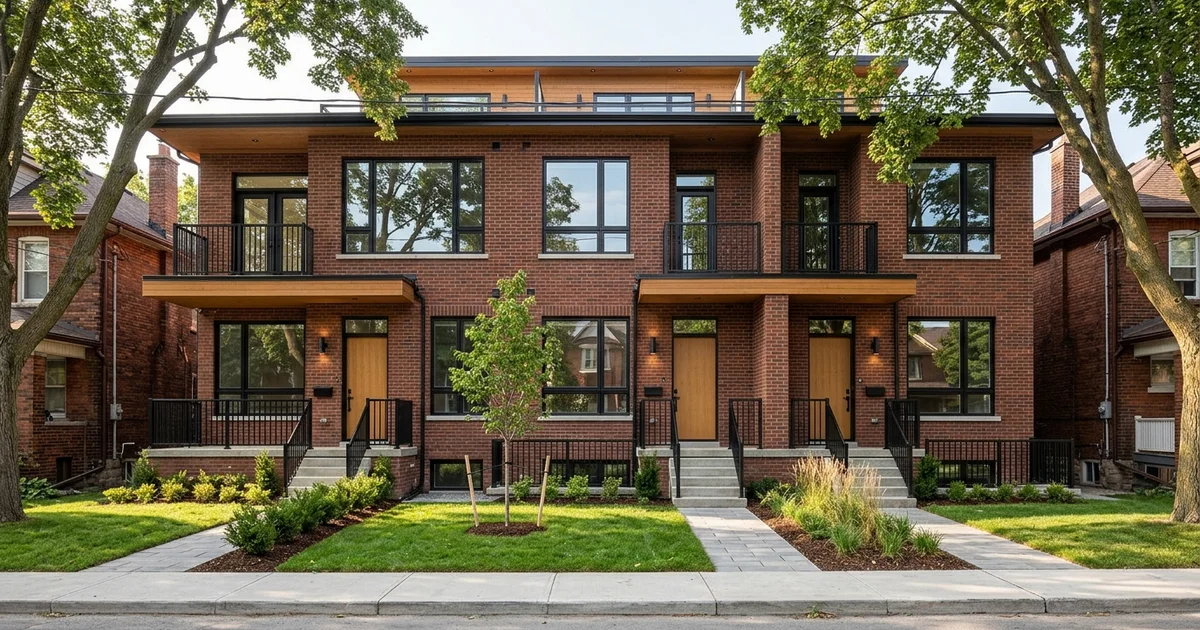
How Multiplex Builds Are Usually Funded
Multiplex construction financing in Ontario usually comes from three sources stacked together: your own equity, a construction loan that pays out in stages, and a takeout mortgage once the building is finished and rented. The trick is timing. Costs start months before rent does, and lenders only release money as work is completed and inspected.
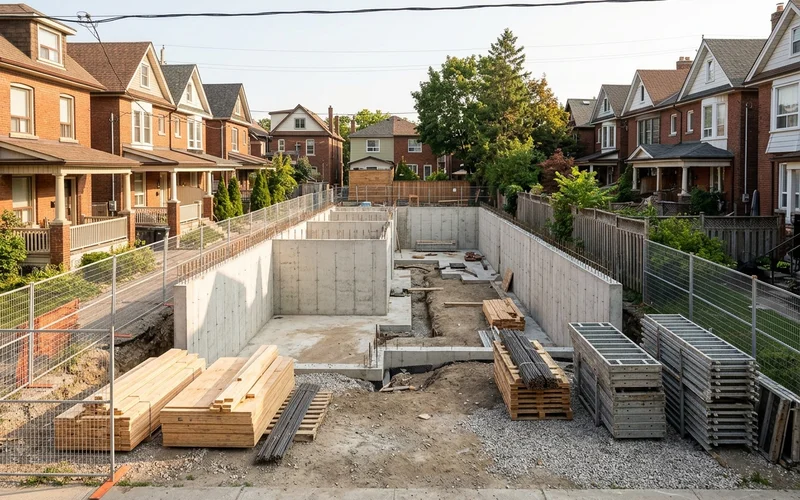
This guide explains the moving parts so you can plan your cash flow before you commit to multiplex construction. It is general information, not financial advice. Talk to a mortgage broker or lender about your situation.
What lenders look for first
A clear unit count backed by zoning, a fixed construction price, a realistic schedule, a builder with HCRA registration and Tarion enrolment, and enough equity to carry the gap between draws.
The Typical Funding Stack
| Stage | Typical funding source | Notes |
|---|---|---|
| Feasibility and design | Owner equity or HELOC | $15K-$65K before any loan draw |
| Permits and soft costs | Owner equity or HELOC | City fees, surveys, reports |
| Demolition and foundation | Construction loan first draws | Often requires equity in first |
| Framing to lock-up | Construction loan draws | Released after inspection |
| Finishes and occupancy | Final construction draws | Holdback often applies |
| After occupancy | Takeout mortgage or refinance | Based on completed value and rent |
Construction Loans and Draw Schedules
A construction loan is not paid out up front. The lender sets a draw schedule tied to milestones, for example: foundation complete, framing and roof complete, mechanical rough-in, drywall, and occupancy. At each milestone, an inspector or quantity surveyor confirms the work, then the lender releases that portion of the loan.
Two things follow from that:
- You pay first, then get reimbursed. Contractors and suppliers often need payment before the draw arrives, so you need cash or a line of credit to bridge the gap.
- Delays cost money. If a milestone slips, so does the draw, while interest keeps running on what has already been advanced.
Our construction contracts use a deposit and a milestone draw schedule that lines up with how lenders release funds, which makes the bridge smaller and easier to plan. Draws follow the build schedule, so our guide on how long it takes to build a multiplex is a useful reference for planning them.
Using Home Equity
Many owners use a home equity line of credit or a refinance on the existing property to fund the early stages. Feasibility, design, permits, surveys and demolition often happen before a construction lender will advance anything. Equity also covers the owner contribution most lenders require before the first draw.
If you are converting the house you live in, your existing mortgage and the house itself are part of the picture. If you are building on a separate lot, the lender looks at land value plus the building’s projected completed value.
Appraisal on Completion Value
For a new multiplex, lenders typically look at what the property will be worth when finished, often based on rental income for buildings with several units. That is called an “as complete” or completion value. A well-documented project with zoning confirmed, a fixed price and realistic rents gives the appraiser something solid to work with.
This is where unit count matters most. A legal fourth unit adds rent, which adds value. A unit that turns out to be illegal, such as a basement that fails ceiling height or a sixth unit outside the approved zones, adds nothing to the appraisal and can put the whole loan at risk.
Why Fixed Pricing Helps Approval
Lenders size construction loans around the budget. If the budget is open-ended cost-plus, the lender has to assume overruns, which means more equity from you or a smaller loan. A fixed-price contract, with allowances listed separately and a written scope, caps that risk.
We fix the construction price after a written feasibility report and design scope, so you can hand your lender a contract instead of an estimate. That is one reason owners in markets like North York, where wider lots make fourplexes attractive to investors, often come to us with financing already lined up. You can see more on our North York fourplex builds page.
Five or More Units: CMHC MLI Select
Buildings with five or more units can qualify for CMHC’s MLI Select program, which can offer longer amortization and higher loan-to-value when the design earns points for energy efficiency, accessibility or affordability. That threshold makes a fourplex plus garden suite, or a sixplex in an approved zone, worth a closer look for some investors. Program terms change, so confirm current criteria with your lender. Our guide on CMHC MLI Select for sixplexes goes into more detail.
A Sample Cash-Flow Timeline
Owners are often surprised by how much cash goes out before the first construction draw arrives. Here is a typical sequence for a fourplex, so you can plan equity and a line of credit around it.
| Stage | Who pays | Typical timing |
|---|---|---|
| Feasibility report | Owner | Month 0 |
| Design and engineering | Owner | Months 1-2 |
| Permit fees and utility applications | Owner | Month 3 |
| Construction deposit | Owner | At contract signing |
| Demolition and foundation | Owner first, then first loan draw | Months 6-7 |
| Framing to lock-up | Loan draws | Months 8-10 |
| Rough-in to finishes | Loan draws | Months 10-14 |
| Final draw and holdback | Loan draw, holdback later | Occupancy and after |
| Takeout mortgage | Refinance | After units are rented |
The key period is the start. Many lenders want the owner’s equity in first, so feasibility, design, permits, the deposit and sometimes early site work all come from your own funds or a HELOC. After that, draws follow milestones, with a short gap each time between paying the trades and receiving the draw.
Questions to Ask Your Lender Early
- What equity do you require, and must it be spent before the first draw?
- Which milestones trigger draws, and who inspects them?
- How quickly are draws released after inspection?
- What holdback do you apply, and when is it released?
- Do you lend on completion value based on rents, and what rent evidence do you need?
- Does the project qualify for any program such as CMHC MLI Select?
Bring a fixed-price contract and a schedule to that conversation. It makes every answer faster and usually more favourable.
Planning Your Financing
- Get feasibility done first. Lenders want a confirmed unit count and budget.
- Line up equity for soft costs. Design and permits come before any draw.
- Ask for a fixed-price contract. It makes the loan easier to size.
- Match the draw schedule to the contract. Fewer cash gaps.
- Build in a contingency. Even fixed-price projects have allowances and owner changes.
- Plan the takeout early. Know how you will refinance once units are rented.
If your lender needs a fixed number, we can get a fixed price for your lender after a written feasibility assessment and design scope.